I'm That Teacher SVG: An Embroidery Review
As a professional embroidery designer and product reviewer, I approach every new digital asset with a critical eye. When evaluating the I m That Teacher They Told You About SVG, my primary concern is not just how the graphic looks on a screen, but how it translates into thread on fabric. This design falls squarely within the Crafts and Graphics categories, targeting a specific niche of educators who appreciate humor and bold typography. However, for those of us running a craft business or managing commercial embroidery projects, the true test lies in stitchability, versatility, and final product value.
First Impressions and Design Personality
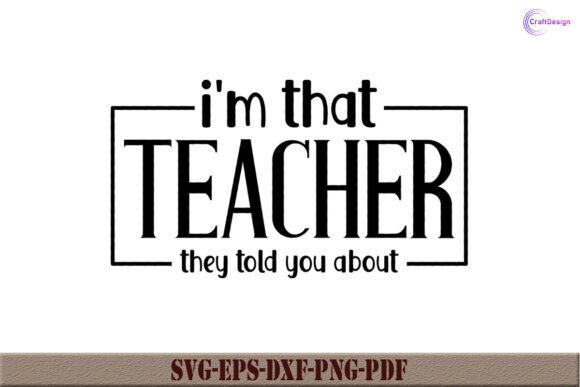
Upon unzipping the file package, which includes SVG, EPS, DXF, PDF, and PNG formats, the immediate impression is one of confident, sassy professionalism. The phrase "I'm That Teacher They Told You About" carries a distinct mood that balances authority with relatability. Visually, the layout suggests a design that relies heavily on typography rather than intricate illustrative elements. For an embroidery project, this is generally advantageous. Text-based designs tend to digitize more cleanly than complex scenes, provided the font weight is sufficient for needle penetration.
The visual personality of this design screams "statement piece." It does not whisper; it announces itself. This makes it an ideal candidate for custom apparel where readability from a distance is key. As a reviewer, I appreciate that the lines appear substantial enough to support satin stitch columns without becoming too dense, though I always advise verifying stitch density before committing to a full production run. The transparent background PNG is particularly useful for creating printable mockups to show clients exactly what the finished product will look like before a single needle drops.
Real-World Application: The Educator’s Tote Bag
To truly evaluate this machine embroidery design, I mentally placed it in a real-life scenario: a heavy-duty canvas tote bag intended as an end-of-year gift or a personal teacher accessory. Tote bags are a staple handmade product because they offer a flat, stable stitching surface. However, canvas has a pronounced fabric texture that can swallow fine details.
In this application, the I m That Teacher They Told You About SVG performs exceptionally well because its strength lies in bold lettering. If I were stitching this out, I would opt for a sturdy cutaway stabilizer to prevent the canvas from puckering under the tension of the stitches. The design’s likely use of fill stitch or thick satin stitch for the lettering ensures high contrast against natural or colored canvas. For an Etsy seller or small shop product creator, this specific use case offers high perceived value. Teachers love personalized gifts that acknowledge their unique role, and this design hits that emotional note perfectly while remaining practical for daily use.
Versatility Across Apparel and Accessories
Beyond tote bags, this digital embroidery file shows promise for sweatshirt embroidery and t-shirts. The casual, humorous tone aligns perfectly with relaxed-fit apparel. When working with knit fabrics like fleece or jersey, the challenge shifts from texture to stretch. Here, the design’s simplicity works in your favor. Complex applique designs can sometimes distort on stretchy fabrics if not stabilized correctly, but a text-centric graphic like this maintains its integrity better during wear and washing.
For holiday embroidery or back-to-school merchandise, this design serves as excellent boutique branding. It creates instant recognition among the target demographic. Whether used on a nursery decor item for a teacher’s own child or as part of a staff appreciation bundle, the design assets included in this zip file provide the flexibility needed for various commercial embroidery ventures. The inclusion of EPS and DXF files means that if you need to resize the design significantly for a baby embroidery onesie versus an adult hoodie, you have vector options to maintain clean edges, assuming you have software to convert them to embroidery formats.
Critical Considerations for Stitching Success
While the design is versatile, experienced makers know that no file is universally perfect. There are specific scenarios where you must exercise caution. Small hoop sizes are the first red flag. If you attempt to shrink this design down for a pocket logo or a cap, the lettering may become illegible. Tiny lettering is the enemy of clean embroidery; threads can break, and letters can merge into unrecognizable blobs. Always check your minimum text height requirements against the design dimensions.
Dark fabrics present another consideration. While the PNG allows for easy visualization, remember that thread colors behave differently than digital pixels. A white thread on a navy sweatshirt provides classic contrast, but if you choose a tonal color scheme for a more subtle look, ensure the stitch density is high enough to prevent the fabric grain from showing through. Additionally, curved surfaces like caps require specialized hooping. If the design is tall or wide, it may not fit the curvature of a standard cap frame without distortion. Test on a scrap cap or similar curved surface first.
Fabric texture also dictates your stabilizer choice. On thin or sheer fabrics, a heavy satin stitch might cause tearing. In such cases, you might need to adjust the underlay or switch to a lighter fill stitch, which requires editing capabilities. For products needing frequent washing, such as kitchen towels or baby clothes, ensure the top thread is polyester or rayon rated for laundering, and that the bobbin tension is balanced to prevent unraveling over time.
Professional Notes for Makers and Sellers
Before listing any finished product featuring the I m That Teacher They Told You About SVG in your shop, adhere to these professional best practices:
- Test Before Selling: Never assume a digital file is stitch-ready. Run a test sew-out on scrap fabric that matches your final project’s weight and weave. Inspect the registration, thread breaks, and overall clarity.
- Verify Licensing: The product description mentions files are perfect for shirt printing, but embroidery rights can differ. Confirm whether your purchase includes commercial licensing for selling physical embroidered goods versus just digital transfers. Protect your craft business by knowing your rights.
- Mockup Accuracy: Use the provided transparent PNG to create realistic printable mockups. Do not mislead customers with digital renders that look nothing like actual thread. Trust is built on accurate representation of the handmade product.
- Thread Color Contrast: Evaluate your thread colors against the garment color in natural lighting. Screen brightness varies; physical thread does not. High contrast usually yields better customer satisfaction for statement designs.
- Stabilizer Selection: Match your stabilizer to the fabric, not just the design. A tear-away might suffice for a towel, but a knit t-shirt demands cutaway. Proper stabilization is the difference between a professional finish and a puckered mess.
- Check File Compatibility: While SVG, EPS, DXF, PDF, and PNG are included, ensure you have the correct software to convert these graphics into machine-specific embroidery files (like PES, DST, or JEF) if they are not pre-digitized. Understand the distinction between a graphic file and a stitch file.
Elevating Your Embroidery Business
Ultimately, the I m That Teacher They Told You About SVG represents a strong addition to any maker’s library of design assets. Its success in real-world applications depends entirely on the operator’s understanding of materials and machinery. By treating this graphic as a starting point for creative adaptation rather than a guaranteed outcome, you elevate the quality of your work. Whether you are creating a personalized gift for a favorite educator or stocking your Etsy store with seasonal apparel, this design offers the right blend of personality and practicality. Just remember: in embroidery, the magic happens in the preparation, not just the stitching. Respect the process, test your variables, and let the design speak clearly through your craftsmanship.