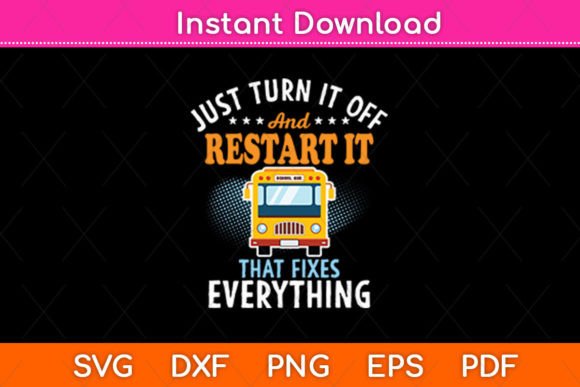
Restart It That Fixes Everything School Design Review
First Impressions: Humor Meets Function in Graphics
When evaluating a new machine embroidery design for my shop, I look past the digital preview and immediately imagine how it will behave under the needle. The "Restart It That Fixes Everything School" concept is inherently playful, tapping into a universal tech trope that resonates with teachers, IT staff, parents, and anyone who has ever dealt with school technology glitches. As a reviewer and maker, my first impression of this graphic is that it bridges the gap between novelty and wearable art. It isn't just a joke; it is a relatable sentiment packaged in a visual format that begs to be stitched onto functional items.
The layout typically associated with this theme suggests bold lines and clear iconography, which is exactly what we want in Graphics intended for thread. Unlike intricate floral patterns or photorealistic landscapes, this design relies on shape and text hierarchy. For an Etsy seller or craft business owner, this clarity is a massive advantage. It reads well from a distance, making it ideal for merchandise that needs to communicate its message instantly at a craft fair or in a thumbnail photo. However, because this is primarily marketed as an SVG for cutting machines like Cricut or Silhouette, the transition to embroidery requires a critical eye toward digitization quality before you commit to a production run.
Real-World Application: Stitching the Tech Trope
To truly test the viability of the Restart It That Fixes Everything School asset, I approached it with a specific project in mind: a custom crewneck sweatshirt for a school district’s technology support team. This scenario moves beyond simple hobbyist crafting and enters the realm of commercial embroidery where durability and professional presentation matter. The goal was to create a personalized gift that felt official yet retained the inside humor of the department.
In this real-life application, the design served as a left-chest placement rather than a full-back print. This decision was strategic. On a sweatshirt, the fabric texture is substantial, requiring a design with enough stitch density to prevent sinking into the fleece. Because the source file is an SVG, I had to ensure the converted embroidery file utilized appropriate satin stitch borders and fill stitch interiors. A running stitch alone would have disappeared against the textured knit. The result was a crisp, tactile emblem that elevated the garment from a basic uniform piece to a coveted team morale booster. This case study proves that when adapted correctly, this graphic holds up as a premium handmade product.
Navigating Fabric Challenges and Hoop Limitations
While the design shines on stable fabrics, my review must address where caution is necessary. Not every embroidery project is created equal, and the "Restart It" theme presents unique challenges depending on your substrate. If you are attempting this on stretchy performance wear or thin baby clothes, the risk of puckering increases significantly. The geometric nature of tech-inspired graphics means any distortion is immediately visible; a crooked loading bar or warped power button ruins the illusion.
For baby embroidery or lightweight tees, I strongly recommend using a high-quality cutaway stabilizer and potentially a topping to keep stitches defined. Furthermore, be mindful of your hoop size. This design often includes text elements that can become illegible if scaled down too aggressively for a 4x4 hoop. Tiny lettering is the enemy of clean embroidery. If you cannot maintain legibility at your desired scale, pivot to using this graphic for larger items like a tote bag design, apron, or pillow cover where the scale allows for proper stitch definition. Always test on scrap fabric first; guessing on tension and stabilization is a costly mistake for any small shop product.
Commercial Viability for Makers and Sellers
For those running an Etsy shop or selling at markets, the commercial potential of Restart It That Fixes Everything School lies in its niche specificity. General school designs are saturated, but tech-humor specifically targeted at educators and support staff is an underserved market. When listing a finished product featuring this design, your photography should highlight the stitch quality. Use printable mockup templates to show customers how the design looks on different colored garments, but always include a photo of the actual stitched item to build trust.
Value perception is tied directly to execution. A sloppy stitch-out devalues the humor; a precise, dense stitch-out makes it feel like boutique apparel. Consider offering this as part of a bundle or a customizable option where buyers can add their specific school name or year. This transforms a static graphic into a custom apparel service. Additionally, verify your licensing. Since the original description highlights instant download files for cutting machines, you must confirm whether the digital embroidery file version carries commercial rights for physical sales. Protecting your business means ensuring your design assets are cleared for the specific way you intend to monetize them.
Designer Notes: Technical Checks Before You Stitch
Before you load this design into your machine, run through this practical checklist to ensure professional results:
- Verify File Conversion: Since the source is an SVG for cutters, ensure your embroidery software has properly assigned stitch types. Auto-digitizing often defaults to fill stitches where satin columns are needed for text clarity.
- Contrast Testing: Test thread colors against both light and dark backgrounds. White text on a navy sweatshirt pops, but gray text might vanish. High contrast is non-negotiable for readability.
- Density Audit: Check for areas of excessive density where multiple elements overlap. This can cause needle breaks or stiff patches. Reduce density or add pull compensation if necessary.
- Stabilizer Matching: Match your stabilizer weight to the fabric, not just the design. Heavy designs on light fabric require different support than heavy designs on denim.
- Mockup vs. Reality: Never rely solely on screen rendering. Colors and spacing look different in thread. Create a sew-out sample to photograph for your listings.
- Licensing Confirmation: Double-check terms regarding commercial embroidery use versus personal crafting use before listing any item for sale.
Elevating the Finished Product
Ultimately, Restart It That Fixes Everything School is more than just a witty phrase; it is a test of your technical finishing skills. Whether you are creating an embroidered patch for a backpack, a holiday gift for a favorite teacher, or inventory for your online store, the success of this design depends on respecting the medium. Thread behaves differently than vinyl or ink. By focusing on proper stabilization, appropriate scaling, and meticulous color selection, you transform a simple digital graphic into a high-value textile product.
As makers and designers, our job is to interpret digital concepts into tangible reality. This design offers a fantastic opportunity to showcase that skill set. It appeals to a specific audience that appreciates both the humor and the craftsmanship. When executed with the attention to detail outlined above, it becomes a standout piece in any Crafts portfolio, proving that even a joke about restarting computers deserves a premium, professionally stitched presentation. Take the time to refine your process, and your customers will recognize the difference between a quick craft and a quality creation.