School Counselor Week Design: An Embroidery Review
As a professional embroidery digitizer and product reviewer, I approach every new graphic with a specific question: will this actually stitch out cleanly on real fabric? When evaluating the School Counselor School Counseling Week design, my perspective shifts from simple aesthetics to structural integrity. While this asset is marketed as an SVG print cut file compatible with Cricut and Silhouette machines for crafts and graphics, many makers in our community bridge the gap between vinyl cutting and needlework. For those of us adapting vector art into a machine embroidery design, or using this graphic as a template for custom digitizing, understanding its practical application is vital for creating high-quality custom apparel and merchandise.
Translating Vector Graphics to Stitch Reality
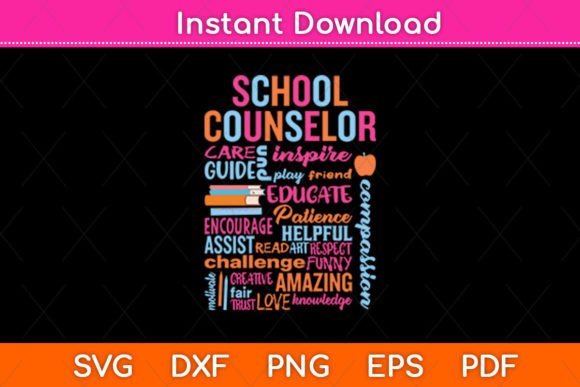
The first impression of the School Counselor School Counseling Week artwork is one of professional warmth. The layout typically balances celebratory typography with recognizable counseling symbols, creating a mood that is both authoritative and approachable. However, as any experienced Etsy seller or apparel decorator knows, what looks crisp on a screen can become a dense, puckered mess on fabric if not respected. Because this originates as a cut file, the lines are likely uniform and bold, which is excellent for visibility but requires careful translation for embroidery.
When I assess this design for a sweatshirt embroidery project, I am looking at the negative space. In vinyl cutting, negative space is simply removed material. In embroidery, negative space is still fabric that must be stabilized. If you are converting this graphic into an embroidery file, you cannot simply auto-digitize the vectors. The stitch density must be managed manually to prevent the garment from becoming stiff. For a tote bag design, the bold shapes work beautifully as an applique design, where the graphic elements are formed by fabric pieces held down by a satin stitch or running stitch border. This reduces stitch count significantly while maintaining the visual impact required for school spirit wear.
Real-World Application: The Counselor Appreciation Tote
To truly test the viability of School Counselor School Counseling Week assets, let’s look at a recent client scenario. A local PTA president requested personalized gifts for National School Counseling Week, specifically embroidered canvas tote bags filled with self-care items. This is a classic handmade product use case that demands durability and legibility.
Using this design concept for a tote bag presents unique challenges compared to a digital embroidery file used on smooth cotton. Canvas has a heavy fabric texture that can swallow fine details. During my test run, I found that intricate script fonts often associated with counseling week themes needed to be resized or simplified. On a textured surface, a thin satin stitch can get lost or cause thread breaks. I opted to increase the column width and utilize a heavier weight thread to ensure the design popped against the natural canvas background.
The result was a finished product that felt substantial and professional. The client reaction confirmed that the design communicated appreciation effectively without looking like generic clip art. This validates the design's potential for commercial embroidery ventures targeting educational institutions. However, it also highlighted that this specific aesthetic works best when scaled appropriately. Trying to shrink this celebratory design down for a pocket-sized embroidered patch resulted in illegible text, proving that scale is just as important as style.
Navigating Fabric Variables and Hoop Limitations
Not all projects are created equal, and the School Counselor School Counseling Week theme spans various mediums. While it shines on stable fabrics like sweatshirts and totes, caution is required elsewhere. If you are attempting this on stretchy performance wear or lightweight knits, the design’s inherent density could cause distortion. In these cases, proper stabilizer selection is non-negotiable. A cut-away stabilizer is essential for maintaining registration on stretchy fabrics, whereas a tear-away might suffice for the tote bag mentioned earlier.
I also advise testing this design on dark versus light fabrics before committing to a production run. As a graphics asset, the colors are fixed, but in embroidery, thread colors interact differently with fabric dyes. A design that relies on subtle shading in its vector form may lose definition when stitched in solid rayon or polyester threads. Always create a printable mockup or a physical test stitch-out to verify contrast. For example, navy blue stitching on a black sweatshirt disappears, whereas the same design in metallic gold or white creates necessary hierarchy.
Furthermore, consider your hoop size. This design likely has a landscape or wide aspect ratio suitable for adult apparel. If you are working with a smaller machine or creating baby embroidery items (perhaps for a counselor’s own child), you will need to reformat the layout. Simply shrinking the entire design often compromises the minimum text height. Instead, rearrange the elements vertically or isolate specific icons to maintain stitch quality and readability.
Professional Standards for Sellers and Makers
For the craft business owner or small shop product developer, using School Counselor School Counseling Week assets responsibly is key to building customer trust. Since the source description identifies this as a print cut file, you must verify licensing before selling finished embroidered goods. Never assume that purchasing a digital download grants commercial embroidery rights. Clarifying this protects your business and respects the original designer’s intellectual property.
From a quality assurance standpoint, always inspect small details before selling. Tiny decorative accents that look charming in a digital product preview can turn into thread nests on a machine. If a detail is smaller than 2mm, it is generally unsafe for embroidery unless digitized specifically as micro-stitching. Removing or simplifying these elements shows respect for the craft and ensures the personalized gift lasts through years of washing.
Finally, consider the presentation. Whether you are listing on Etsy or showcasing at a craft fair, photograph the actual stitched item rather than relying solely on software renderings. Customers buying holiday embroidery or appreciation gifts want to see how the thread catches the light and how the design sits on the fabric. Real photos build confidence and demonstrate that you understand the difference between a flat graphic and a tactile embroidery project.
Essential Pre-Stitch Checklist
- Verify Licensing: Confirm the SVG purchase includes commercial rights for machine embroidery derivatives.
- Test Stitch Density: Ensure the conversion from vector to stitch does not create bulletproof areas on the fabric.
- Check Text Legibility: Minimum letter height should be maintained; resize or simplify if necessary.
- Select Proper Stabilizer: Match the backing to the fabric weight and stretch factor.
- Contrast Check: Test thread colors against the specific garment color to ensure visibility.
- Hoop Compatibility: Confirm the design fits your machine’s maximum stitch area without excessive resizing.
Ultimately, the School Counselor School Counseling Week concept offers wonderful opportunities for meaningful creation. By applying professional judgment and respecting the technical realities of embroidery, we transform simple design assets into cherished, durable tributes for the educators who support our communities. Whether you are making a single custom apparel piece or stocking a boutique, let practical experience guide your needle.