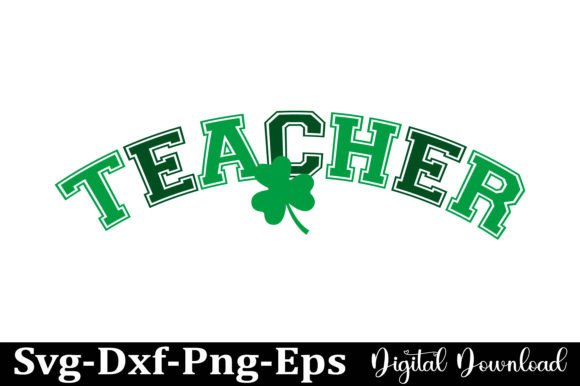
Teacher St Patrick s Day SVG Lucky Design Review
As a professional embroidery digitizer and product reviewer, I approach every new design file with a specific set of criteria: stitchability, marketability, and versatility. When evaluating the Teacher St Patrick s Day SVG , Lucky SVG, my primary focus is not just on how the graphic looks on a screen, but how it translates into thread on fabric. This design arrives as a comprehensive package including AI 10, EPS 10, SVG, DXF, and PNG Transparent 300dpi files. While these formats are standard for vinyl and sublimation, for us in the embroidery community, they serve as the essential blueprint for creating high-quality machine embroidery designs. The "unique design" description suggests a level of originality that is crucial for Etsy sellers and craft business owners looking to avoid generic, overused clip art.
First Impressions and Seasonal Mood
Upon opening the vector files, the immediate impression is one of cheerful professionalism. The layout balances the playful nature of St. Patrick’s Day with the structured aesthetic expected in teacher appreciation gifts. The typography appears clean, which is a critical factor for embroidery; overly ornate scripts often result in lost stitches or illegible text when scaled down. The "Lucky" theme provides a positive emotional hook, making this graphic ideal for personalized gifts rather than just generic holiday decor. For a handmade product creator, this mood strikes the right balance between festive and wearable, ensuring the finished product has longevity beyond March 17th.
Real-World Application: The Teacher Tote Bag Test
To truly evaluate this asset, I mentally placed it into a real-life production scenario: creating a custom embroidered tote bag for a teacher appreciation gift. Canvas totes are a staple small shop product, but they present specific challenges due to fabric texture and weight. Using the Teacher St Patrick s Day SVG , Lucky SVG as a base for digitizing, I considered how the design elements would interact with heavy cotton canvas.
In this scenario, the design needs to hold its own against the coarse weave of the tote. If utilizing the provided vectors to create an applique design, the shapes appear substantial enough to support satin stitch borders without fraying. However, if converting entirely to fill stitch, one must be mindful of stitch density. A dense design on a tote bag can cause puckering if the stabilizer is insufficient. I envision this design centered on a natural canvas tote with green thread accents. The contrast would be high, ensuring the "Lucky" message pops visually. This specific application highlights the design's potential as a high-value boutique product that parents would be proud to gift and teachers would actually use.
Fabric Compatibility and Stitching Considerations
Versatility is key for commercial embroidery projects, but not all fabrics treat digital assets equally. Here is how I assess this design across different substrates:
- Sweatshirt Embroidery: Fleece and French terry are forgiving, but they can swallow fine details. If the Teacher St Patrick s Day SVG , Lucky SVG contains thin running stitch lines, I recommend increasing the stitch width or converting them to bean stitches during the digitizing process to ensure visibility on plush fabrics.
- Baby Embroidery: Onesies and baby blankets require extreme care. The design must be lightweight to prevent the garment from sagging. I would test the stitch count rigorously here. If the graphic is too dense, it could irritate sensitive skin or distort the stretchy knit. Reducing fill density and using a soft mesh cut-away stabilizer would be mandatory.
- Kitchen Towels and Tea Towels: These are excellent candidates for this theme. The smooth surface allows for crisp satin stitches and clear lettering. However, because these items undergo frequent washing, all jump stitches must be trimmed meticulously, and thread tension must be balanced to prevent unraveling over time.
- Caps and Curved Surfaces: If adapting this design for hats, the vertical height is the limiting factor. The layout may need to be arched or condensed. Always verify the hoop size constraints before attempting cap embroidery, as flat vector graphics do not automatically account for cylindrical distortion.
Commercial Value for Makers and Sellers
For Etsy sellers and creative entrepreneurs, the value of a digital embroidery file lies in its ability to generate sales through visual appeal and perceived quality. The included 300dpi PNG Transparent file is particularly valuable for creating printable mockups. Before stitching a single sample, you can overlay this high-resolution image onto product photos to test market interest. This saves time and materials while allowing you to gauge buyer engagement.
Furthermore, the uniqueness of this design asset supports brand consistency. In a saturated market of Crafts and Graphics, having a distinct visual style helps build customer trust. When clients see that your holiday embroidery features cohesive, well-proportioned artwork rather than disjointed clip art, they perceive higher value. This directly impacts the price point you can command for custom apparel and personalized gifts. The "Teacher" angle also opens up B2B opportunities; local schools or PTAs often seek bulk orders for staff recognition, and a professional, non-cartoonish design is more likely to secure those contracts.
Critical Pre-Stitch Checklist for Professionals
Before loading this design into your machine or listing it in your shop, adhere to these practical designer notes to ensure success:
- Verify Licensing Terms: The store welcome message confirms file delivery but does not explicitly detail commercial usage rights for finished products versus digital redistribution. Always clarify whether you can sell the physical embroidered items or if the license restricts you to personal use only. This protects your business from copyright issues.
- Test on Scrap Fabric First: Never run a new design on a final product without a test sew-out. Use a fabric scrap that matches the weight and weave of your intended project. Check for registration issues where colors meet and ensure the stabilizer choice prevents tunneling.
- Evaluate Thread Color Contrast: Green on green is traditional for St. Patrick’s Day but can be disastrous in embroidery if the values are too similar. Test light green thread on dark green fabric and vice versa. Ensure the design remains legible in black and white photography, as this simulates low-light viewing conditions.
- Check Small Detail Integrity: Inspect the vector nodes. Are there tiny serifs or decorative flourishes that will become thread nests? Simplify these areas during digitizing. A clean, slightly simplified version of the Teacher St Patrick s Day SVG , Lucky SVG will always stitch better than a complex one that pushes machine limits.
- Confirm Hoop Size Requirements: Measure the actual dimensions of the design after digitizing. Ensure it fits comfortably within your machine’s maximum stitch area with adequate margin for the presser foot. Resizing vectors is easy; resizing embroidery files after stitching can distort density and ruin the outcome.
Final Verdict on Design Utility
The Teacher St Patrick s Day SVG , Lucky SVG presents itself as a strong foundation for seasonal merchandise. Its inclusion of industry-standard vector formats allows experienced digitizers to customize the output for specific embroidery projects, from delicate baby clothes to sturdy tote bags. The design’s strength lies in its dual appeal to both the education niche and general holiday shoppers. By applying proper stabilization techniques, respecting fabric limitations, and verifying commercial licensing, makers can transform this digital asset into profitable, high-quality handmade products. Remember, the file is merely the starting point; your expertise in material selection and machine tuning is what ultimately delivers the professional finish that customers expect and return for.