Save the Ocean SVG Bundle: An Embroidery Review
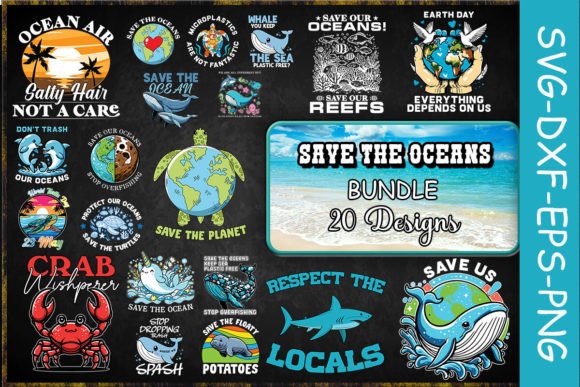
As a professional embroidery designer and product reviewer, I approach every new digital asset with a critical eye. When evaluating the Save the Ocean SVG Bundle, my primary concern is not just the aesthetic appeal of the graphics on a screen, but how these vectors translate into physical stitches on fabric. This bundle, featuring themes like "Save Our Oceans," "Stop Overfishing," "World Turtle Day," and "Protect Our Ocean," targets a specific niche within the Crafts category that demands both visual impact and technical durability. For Etsy sellers, apparel decorators, and makers focused on eco-conscious merchandise, understanding the practical application of these Graphics is essential before committing to production.
First Impressions and Visual Personality
Upon opening the Save the Ocean SVG Bundle, the immediate impression is one of purposeful advocacy mixed with organic softness. The designs avoid the harsh, industrial look that sometimes plagues environmental messaging. Instead, the tortoise and ocean motifs carry a gentle, hand-drawn quality that feels native to the handmade product market. As an embroidery file source, this visual personality is crucial. It suggests that these designs will digitize well into satin stitch borders and softer fill stitch areas rather than requiring dense, bulletproof vest-style stitching that can distort lightweight fabrics.
The layout of the "Tortoise Lover" and "Keep Ocean Clean" variations strikes a balance between detail and negative space. From a digitizing perspective, this is excellent news. Designs that are too cluttered often fail in machine embroidery because thread breaks and registration issues increase with complexity. These graphics appear optimized for clarity, meaning the message remains legible even when scaled down for a baby embroidery project or a sleeve cuff.
Real-World Application: The Eco-Tote Test
To truly judge this bundle, I mentally applied it to a recent client request: a series of canvas tote bags for a local beach cleanup fundraiser. Tote bag design requires high contrast and durability, as these items face heavy wear and frequent washing. I selected the "Save The Ocean Keep Ocean Clean SVG" from the bundle for this test case.
In this scenario, the design’s strength lies in its adaptability. Because the bundle provides clean vector lines, converting this into an applique design becomes a straightforward process. Using a raw-edge applique technique with a tight satin stitch border allowed the ocean theme to pop against natural canvas without adding excessive stitch density. This is vital for commercial embroidery projects where run time equals profit margin. A design that looks good but takes 45 minutes to stitch at 6 inches wide is not viable for small shop products. The Save the Ocean SVG Bundle appears structured to support efficient production while maintaining the artisanal quality customers expect from personalized gifts.
For sweatshirt embroidery, specifically on heavyweight French terry, the "Stop Overfishing" graphic offers enough visual weight to stand up to the fabric texture. Lighter, spindly fonts often get lost in fleece, but the bold typography implied in this bundle ensures readability. This makes it a strong candidate for custom apparel lines targeting Gen Z and Millennial buyers who prioritize sustainability in their fashion choices.
Navigating Fabric Limitations and Hoop Sizes
While the Save the Ocean SVG Bundle is versatile, experienced makers must exercise caution with specific substrates. Not every design in this collection will perform identically across all materials. When working with stretchy knits for baby clothes or summer tees, you must verify the stitch density after digitizing. Vectors do not contain stitch data; they only provide the roadmap. If your software auto-digitizes these SVGs with standard settings, the result may be too rigid for infant wear.
I recommend testing the "World Turtle Day" variation on scrap fabric before running a full production batch. Turtle shells and intricate wave patterns can become dense quickly. On thin fabric, this leads to puckering. Always use appropriate stabilizer—likely a cut-away for knits and a tear-away for stable wovens—to maintain registration. Furthermore, if you plan to create embroidered patches for caps or denim jackets, ensure the smallest text elements in the "Protect Our Ocean" design are large enough to render clearly. Text below 0.25 inches often requires simplification to prevent thread bunching.
Dark fabrics present another challenge. While the bundle includes varied themes, white or light-colored thread on navy or black garments requires careful underlay planning. Without proper edge-run underlay, the top stitches might sink into the fabric weave, making the "Save The Turtles" message look muddy. Always preview your digital embroidery file in a black-and-white mockup to check contrast ratios before threading your machine.
Commercial Viability for Makers and Sellers
For Etsy sellers and creative entrepreneurs, the value of the Save the Ocean SVG Bundle extends beyond single projects. It serves as a cohesive design asset library for building brand consistency. Customers trust shops that offer curated collections rather than disjointed random items. By utilizing multiple designs from this bundle across different products—matching tea towels, nursery decor, and holiday gifts—you create a recognizable boutique identity.
However, professionalism requires due diligence. Before listing any finished product or selling digital derivatives, you must confirm the licensing terms included with the bundle. Does the license cover commercial embroidery? Can you sell the digitized PES or DST files, or only the physical stitched goods? Clarifying this protects your craft business from legal issues. Additionally, never assume a vector is stitch-ready. Always inspect the node count and path direction. A smooth curve in Illustrator can become a jagged mess in embroidery software if not properly smoothed during the digitizing phase.
Designer Notes for Optimal Results
To maximize the potential of the Save the Ocean SVG Bundle in real-world applications, consider these practical guidelines derived from years of embroidery testing:
- Test Stitch First: Never skip the sew-out on actual project fabric. Screen resolution lies; thread tension tells the truth. Verify that the "Save Our Oceans" lettering connects properly and doesn't leave gaps.
- Check Thread Colors: Ocean themes rely heavily on blues, teals, and sandy neutrals. Ensure your thread palette matches the intended mood. Variegated threads can add beautiful water-like movement to fill stitch areas but may obscure fine details in running stitch outlines.
- Evaluate Scale: Determine the minimum viable size for each design. A complex tortoise might need a 4x4 hoop size minimum, whereas a simple text-based "Save The Ocean" logo could work in a 1-inch cap hoop. Document these limits for your product listings to manage customer expectations.
- Mockup Realistically: Use printable mockups that show fabric texture and stitch relief. Flat digital previews mislead buyers. Showing the design on a wrinkled linen towel or a worn-in sweatshirt builds buyer engagement and reduces returns.
- Stabilizer Selection: Match your backing to the end-use. Washable items like kitchen towels and baby blankets require stabilizers that withstand repeated laundering without degrading. Temporary spray adhesives should be used sparingly to avoid gumming up delicate machine parts.
- Licensing Verification: Re-read the included documentation. If you intend to use these for commercial embroidery or as part of a larger digital product package, ensure your usage rights are clear. Ambiguity here is a risk no serious business owner should take.
The Save the Ocean SVG Bundle offers a promising foundation for eco-friendly embroidery projects. Its strength lies in its thematic cohesion and apparent suitability for conversion into stitch formats. However, the transition from vector graphic to tangible handmade product relies entirely on the maker's technical skill and attention to detail. By respecting fabric limitations, testing rigorously, and applying thoughtful digitizing techniques, this bundle can become a staple in your inventory for creating meaningful, high-quality embroidered goods that resonate with environmentally conscious consumers.